
"13 grind settings"
400 article(s) found

How does the black rose hand-made coffee taste in Santa Rosa Manor, Guatemala? how do you drink Santa Rosa coffee?
Professional coffee knowledge exchange more coffee bean information please follow the coffee workshop (Wechat official account cafe_style) Guatemalan Coffee Santa Rosa Buenos Aires (Santa Rosa Manor): on behalf of Hacienda Santa Rosa Buenos Aires S.A., La Democracia, Huehuetenango. Alfaro family, the fourth generation, the place where the manor is located

Turks drink unfiltered coffee Turkish coffee culture
Coffee in the ancient Middle East, like the legendary myth of the 1001 night, is a veiled girl with a thousand faces, which can not only help get close to God, but also wash the spring of sadness. When it comes to coffee, we have to mention the Middle East (Turkey) coffee, because whether from the perspective of Islam or Christianity, the origin of coffee is in the remote and mysterious mountains of the Middle East. After the thirteenth to fifteenth centuries,

Introduction of Colombian individual Flavor treatment Variety Taste grindability
Introduction to Colombian coffee beans (1) sour: Colombia 30%, Brazil 30%, Guatemala 20%, mocha 20% (2) bitter: Colombia 30%, Brazil 30%, Kilimanjaro 20%, Robsta 20% (3) strong: Colombia 40%, Guatemala 20%, Mantenin 20%, Brazil 20% (4) mild: Colombia 40%, Brazil 30%, Mocha 20%, Luo

The coffee brewed from the smart cup must be bad?! The characteristics of Smart Cup Coffee
Please pay attention to the coffee workshop (Wechat official account cafe_style) smart filter cup is one of the items of hand filter cup, not only widely recognized internationally, but also designated by many boutique coffee shops, because of its simple mode of operation, so that every beginner can easily use, at home to make their own cup of good coffee, after use is also very convenient in cleaning, just like at home

Coffee is not filtered by Turkish locals.
Coffee in the ancient Middle East, like the legendary myth of the 1001 night, is a veiled girl with a thousand faces, which can not only help get close to God, but also wash the spring of sadness. When it comes to coffee, we have to mention the Middle East (Turkey) coffee, because whether from the perspective of Islam or Christianity, the origin of coffee is in the remote and mysterious mountains of the Middle East. After the thirteenth to fifteenth centuries,

I heard that there is a formula to make coffee sweeter?
Whether it is the cultivation of coffee beans, roasting, or coffee brewing, people will think about what to do to make it more sweet, and few people will think about how to make it sour or bitter. it shows that everyone enjoys the pleasure of sweetness. At this time, a friend is about to ask: is there anything?
Breathtaking ancient Turkish coffee culture and etiquette
Coffee in the ancient Middle East, like the legendary myth of the 1001 night, is a veiled girl with a thousand faces, which can not only help get close to God, but also wash the spring of sadness. When it comes to coffee, we have to mention the Middle East (Turkey) coffee, because whether from the perspective of Islam or Christianity, the origin of coffee is in the remote and mysterious mountains of the Middle East. After the thirteenth to fifteenth centuries,
Turkey: breathtaking coffee drinking habits unique to Turkey
Coffee in the ancient Middle East, like the legendary myth of the 1001 night, is a veiled girl with a thousand faces, which can not only help get close to God, but also wash the spring of sadness. When it comes to coffee, we have to mention the Middle East (Turkey) coffee, because whether from the perspective of Islam or Christianity, the origin of coffee is in the remote and mysterious mountains of the Middle East. After the thirteenth to fifteenth centuries,
The breathtaking ancient Turkey of coffee culture and etiquette
Coffee in the ancient Middle East, like the legendary myth of the 1001 night, is a veiled girl with a thousand faces, which can not only help get close to God, but also wash the spring of sadness. When it comes to coffee, we have to mention the Middle East (Turkey) coffee, because whether from the perspective of Islam or Christianity, the origin of coffee is in the remote and mysterious mountains of the Middle East. After the thirteenth to fifteenth centuries,

Arabica Coffee Common sense Turks drink unfiltered coffee
Coffee in the ancient Middle East, like the legendary myth of the 1001 night, is a veiled girl with a thousand faces, which can not only help get close to God, but also wash the spring of sadness. When it comes to coffee, we have to mention the Middle East (Turkey) coffee, because whether from the perspective of Islam or Christianity, the origin of coffee is in the remote and mysterious mountains of the Middle East. After the thirteenth to fifteenth centuries,

The basic knowledge of coffee culture in Turkey
Coffee in the ancient Middle East, like the legendary myth of the 1001 night, is a veiled girl with a thousand faces, which can not only help get close to God, but also wash the spring of sadness. When it comes to coffee, we have to mention the Middle East (Turkey) coffee, because whether from the perspective of Islam or Christianity, the origin of coffee is in the remote and mysterious mountains of the Middle East. After the thirteenth to fifteenth centuries,

Coffee basic common sense breathtaking ancient Turkish coffee
Coffee in the ancient Middle East, like the legendary myth of the 1001 night, is a veiled girl with a thousand faces, which can not only help get close to God, but also wash the spring of sadness. When it comes to coffee, we have to mention the Middle East (Turkey) coffee, because whether from the perspective of Islam or Christianity, the origin of coffee is in the remote and mysterious mountains of the Middle East. After the thirteenth to fifteenth centuries,

Turkish Coffee is the most exquisite Coffee Coffee
Coffee in the ancient Middle East, like the legendary myth of the 1001 night, is a veiled girl with a thousand faces, which can not only help get close to God, but also wash the spring of sadness. When it comes to coffee, we have to mention the Middle East (Turkey) coffee, because whether from the perspective of Islam or Christianity, the origin of coffee is in the remote and mysterious mountains of the Middle East. After the thirteenth to fifteenth centuries,

How much is the ratio of powder to water for one serving of hand-brewed coffee? How many grams of hand-brewed coffee for one serving?
Professional coffee knowledge exchange More coffee bean information Please pay attention to coffee workshop (Weixin Official Accounts cafe_style) 1. Ratio of coffee powder to water: Generally, coffee spoons are attached when buying filter cups, and a flat spoon is about 8g. The advantage of hand brewed coffee is that it can open up the flavor of fresh coffee beans. The ratio of coffee powder to water is about 1g coffee powder to 10c.c water.

Does the extraction rate of espresso accord with 'gold cup theory' and 'gold cup extraction'?
For the exchange of professional baristas, please pay attention to the coffee workshop (Wechat official account cafe_style) scaa the proportion of Gold Cup coffee defined by the American Fine Coffee Association and the scae European Fine Coffee Association. The extraction rate of coffee must be about 20%, while the TDS is about 1.1% 1.3%. In view of Drip Filter dripping and brewing, how to extract the best coffee flavor, there are no controlling factors.
The taste of coffee the exquisite coffee path in Turkey
Coffee in the ancient Middle East, like the legendary myth of the 1001 night, is a veiled girl with a thousand faces, which can not only help get close to God, but also wash the spring of sadness. When it comes to coffee, we have to mention the Middle East (Turkey) coffee, because whether from the perspective of Islam or Christianity, the origin of coffee is in the remote and mysterious mountains of the Middle East. After the thirteenth to fifteenth centuries,
Should the proportion of hand-brewed coffee be powder-to-water ratio or powder-to-liquid ratio? How to convert powder-to-water ratio and powder-liquid ratio
The difference between powder-to-water ratio and powder-to-water ratio is the ratio of coffee powder to the total amount of water injected. For example, we usually say 15 grams of powder, 1:15 powder-to-water ratio, which means 15 grams of powder, and the total amount of hot water injected is 225g. And the powder-to-liquid ratio, which focuses on the relationship between coffee and coffee liquid, similarly, if it is 15g powder, 1:15 powder-to-liquid ratio, 15g powder will get 225g coffee liquid.
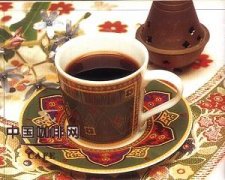
Coffee culture common sense skillfully seizes the popular Turkish coffee
Coffee in the ancient Middle East, like a legendary myth in the Thousand and One Nights, like a veiled girl with a thousand faces, can help to get close to God, but also to wash away sadness. Speaking of coffee, you can't mention Turkish coffee in the Middle East, because whether from the Muslim or Christian standpoint, coffee originated in the distant and mysterious Middle East. 13th to 15th century, in the long